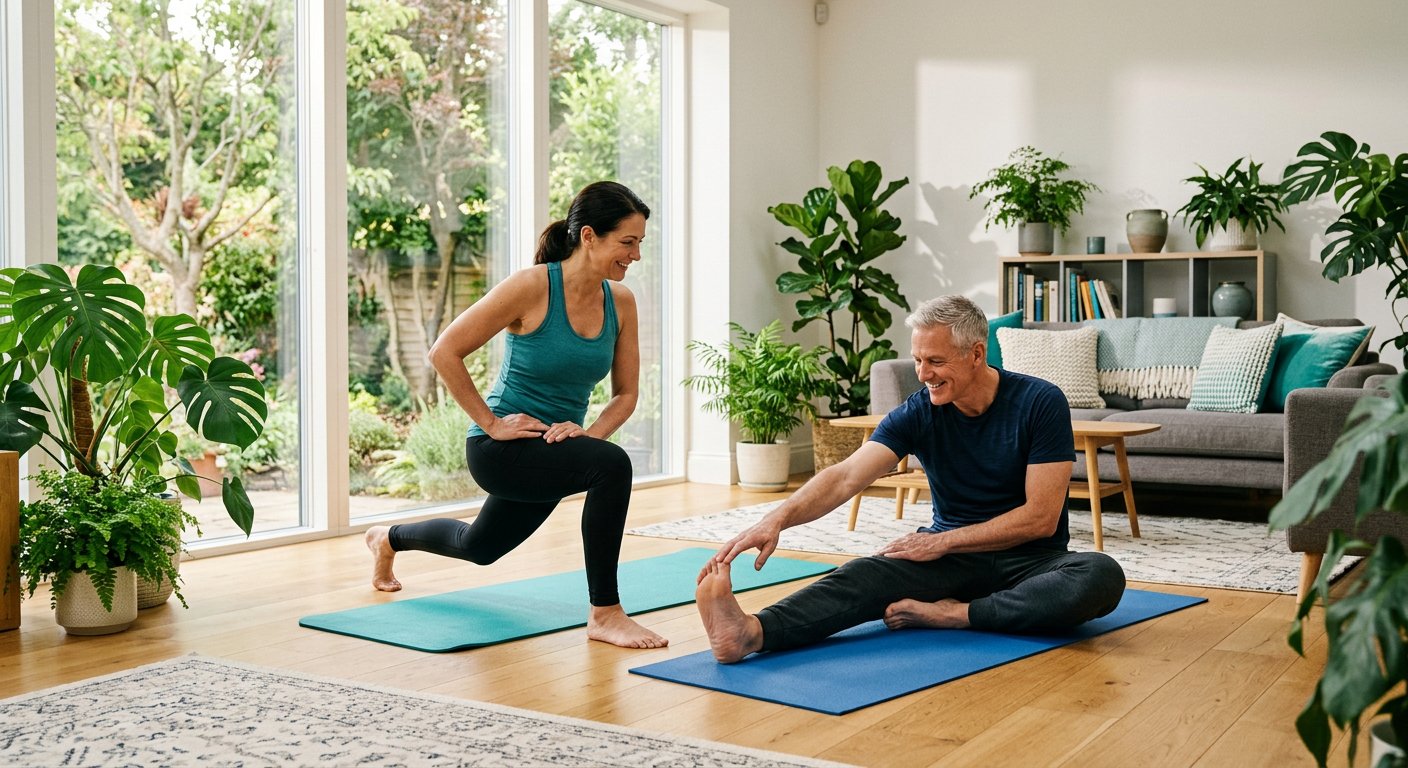
Joints are built to move, but they respond to how we move them. Long periods of stillness make them stiff, while sudden intense activity after months of sitting can leave them sore. The sweet spot is gentle, regular movement — the kind that feels good while you do it and even better afterwards.
Why joints like gentle movement
Joint cartilage has no direct blood supply. It relies on movement to draw in nutrients and circulate synovial fluid, the natural lubricant that keeps movement smooth. In other words, movement is not just exercise — it is nutrition for your joints.
That is why a short daily walk, gentle stretching or a few minutes of mobility work can reduce stiffness more effectively than an occasional hard workout.
Movement that comforts rather than strains
- Walk often. Frequent short walks are kinder to joints than one long, exhausting one.
- Strengthen supporting muscles. Strong muscles around a joint act like a natural brace. Resistance bands and bodyweight exercises work beautifully.
- Stretch gently after movement, never aggressively before it.
- Try low-impact options such as swimming, cycling, tai chi, yoga or simply rocking and rolling your joints through their comfortable range.
- Warm up kindly before gardening, decorating or any task that involves lifting or kneeling.
Everyday posture and lifting
Many joint complaints are rooted in ordinary daily habits rather than sport:
- Hours in the same seated position — take breaks and move before you feel stiff.
- Lifting with your back instead of your legs, or twisting while carrying something heavy.
- Hunched screen time straining your neck and shoulders.
- Sleeping positions that leave you sore — a supportive pillow between the knees or under the arm helps many people.
Small adjustments to how your workspace and daily routine are set up often bring relief surprisingly fast.
Weight, nutrition and joint comfort
Every extra pound of body weight places several pounds of load through the knees and hips with each step, so supporting a healthy weight is one of the most protective things you can do for your joints. It also lowers inflammation throughout the body.
Helpful nutrients include calcium and vitamin D for bone strength, omega-rich fish for inflammation balance, and plenty of colourful plants. Our Wellness & Nutrition team can shape this around your tastes and medical needs.
Rest, heat and recovery
Rest is part of training for real life. After a demanding day, gentle heat can relax tight muscles, while a cold pack is often better for a hot, freshly irritated joint. Elevating sore legs and feet helps too.
Alternate activity with recovery, and respect pain that sharpens or persists. Discomfort that lasts should be assessed, not ignored.
Consistency beats intensity. A few gentle minutes every day will do more for your joints than an occasional heroic effort.
Gentle daily joint care
- Move a little every day — a short walk counts.
- Break up long sitting with a stretch.
- Strengthen the muscles around sore joints.
- Use heat for stiffness and cold for fresh irritation.
When to have joint pain assessed
If pain is stopping you from doing what you love, waking you at night, causing swelling, or lasting beyond a couple of weeks, please have it looked at. Our Joint & Bone Health team offers gentle assessment and guided therapy to help you move comfortably again.